
“If history had a flavor, Xi'an would be the oldest and richest of all.”
The ancient capital of thirteen dynasties and the starting point of the Silk Road, Xi'an is like a living encyclopedia of Chinese civilization. Here you can touch the thousand-year-old armor of the First Emperor's Terracotta Warriors, listen to the bells of the Big Wild Goose as they narrate the odyssey of Xuanzang, and pedal over the Ming Dynasty wall, feeling the pulse of the past and present. At dusk, the aroma of spiced lamb in the Muslim Quarter mingles with the neon lights of the Drum Tower, turning this city into a true magician of time.
From imperial tombs to everyday life, from Buddhism to street banquets, Xi'an blends the ancient and the modern like no other. Ready to travel back in time? Your millennia-old adventure begins here.
9 must-see places in Xi'an that you shouldn't miss
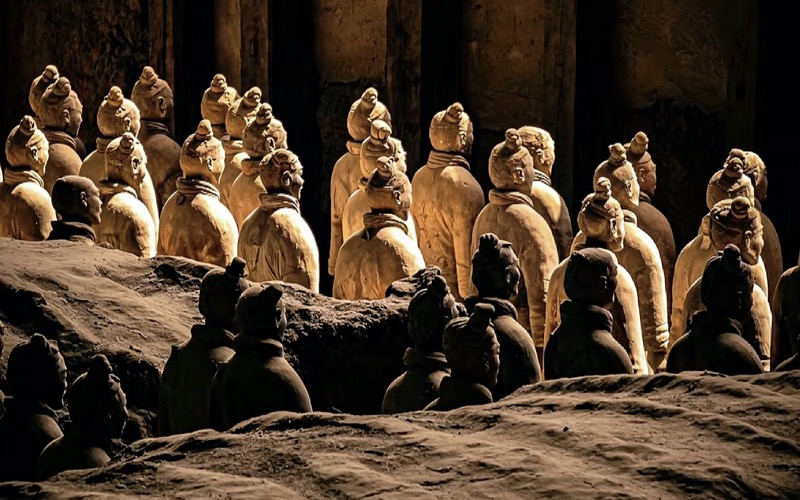
Museum of the Mausoleum of Emperor Qin Shi Huang and the Terracotta Warriors (秦始皇兵马俑博物馆)
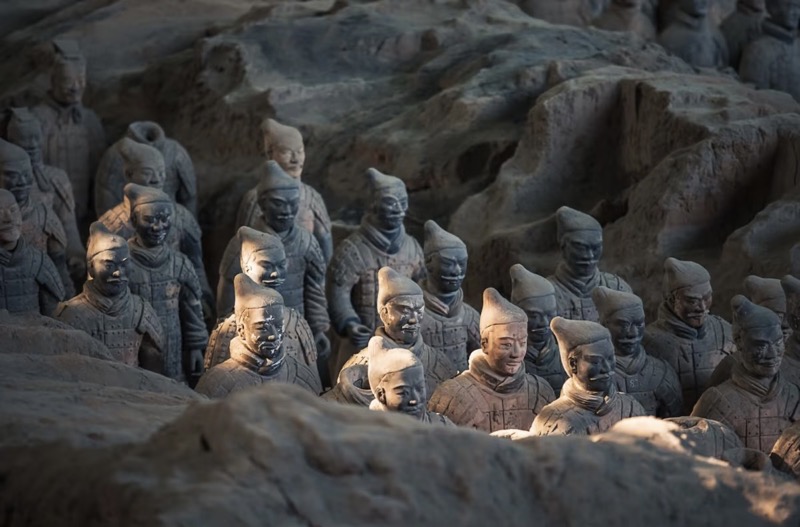
As a world cultural heritage, the Museum of the Mausoleum of Emperor Qin Shi Huang It is one of the greatest archaeological discoveries of the 1974th century and is known as the “Eighth Wonder of the World.” Accidentally discovered by farmers in 1, these subterranean warriors guard the tomb of China’s first emperor. Pit 6,000, the largest, displays 2 infantry and chariot figures in a rectangular formation; Pit 3 reveals cavalry and archers, demonstrating the military strategy of the Qin Dynasty; Pit XNUMX is believed to have been the headquarters. The handcrafted details—hairstyles, armor, even the soles of the shoes—are unique to each figure.
Great Wild Goose Pagoda and Daci'en Temple (大雁塔·大慈恩寺)
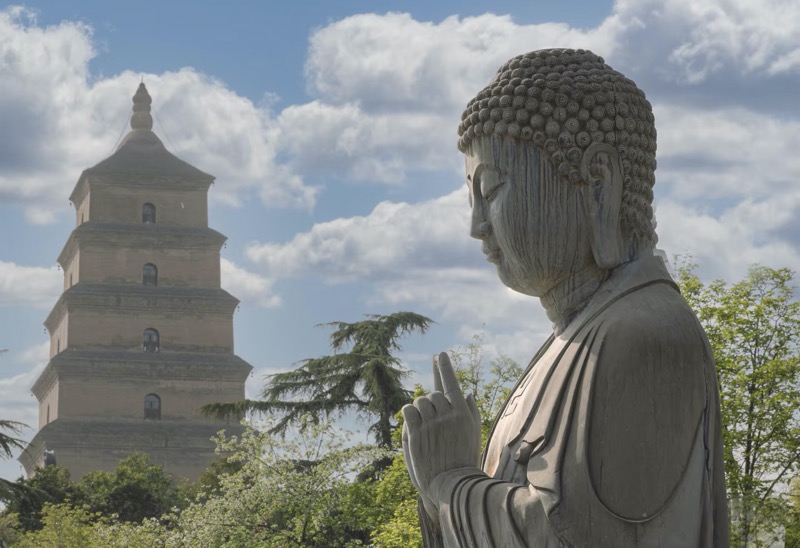
Built in 652 under the supervision of the monk Xuanzang to house Buddhist sutras brought from India. The current pagoda, restored in the Ming Dynasty, measures 64.517 meters. Its wooden stairs lead to windows with panoramic views of the city. The main hall of the temple houses Ming-era Buddhist triads, while the Xuanzang Institute depicts his journey through frescoes. “Records of the Western Regions”At night, the musical fountain show (the largest in Asia) and the lights of Tang Paradise create a magical landscape.
Xi'an Wall (西安城墙)
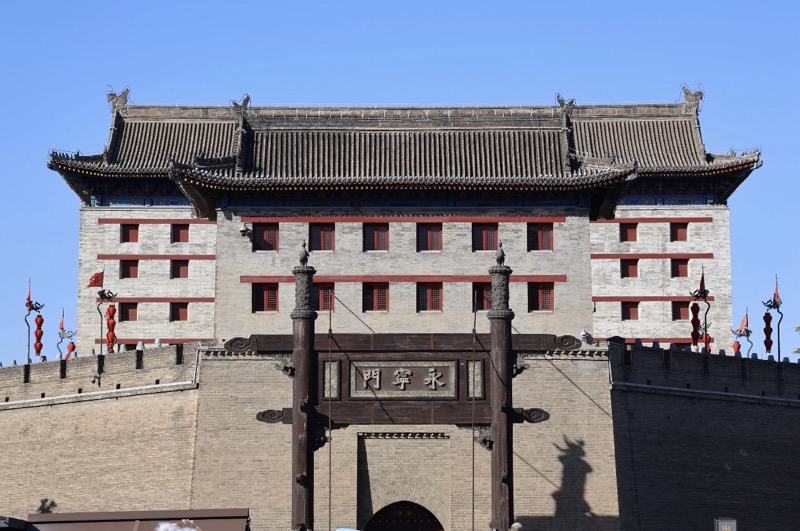
China's best-preserved ancient wall, dating back to the Sui and Tang dynasties, was expanded during the Ming Dynasty. Its 13.74 km (18 mi) wall houses 12 gates, with Yongning (southern) being the most intact, with triple defense towers. Measuring 14-XNUMX meters (XNUMX-XNUMX feet) wide, it's ideal for cycling, passing by historic towers like Kuixing.
Huaqing Palace (华清宫)
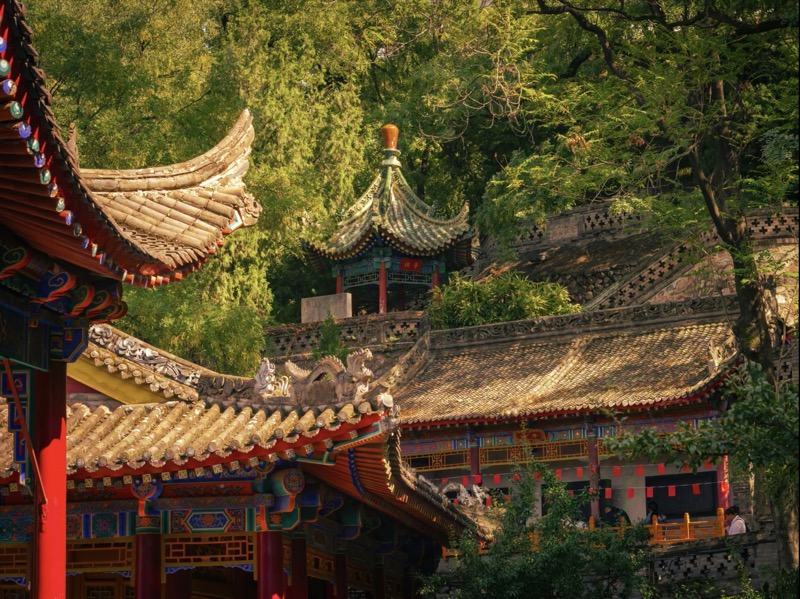
This imperial hot spring garden dates back to the time of King You of Zhou (8th century BC), flourishing in the Tang Dynasty. It preserves pools such as "Lotus" y "Begonia" —the latter, a favorite of Concubine Yang Guifei, with a black jade background. In winter, the spectacle “Song of Eternal Love” uses hot springs as a setting to narrate the tragedy of Yang and Emperor Xuanzong.
Shaanxi History Museum (陕西历史博物馆)
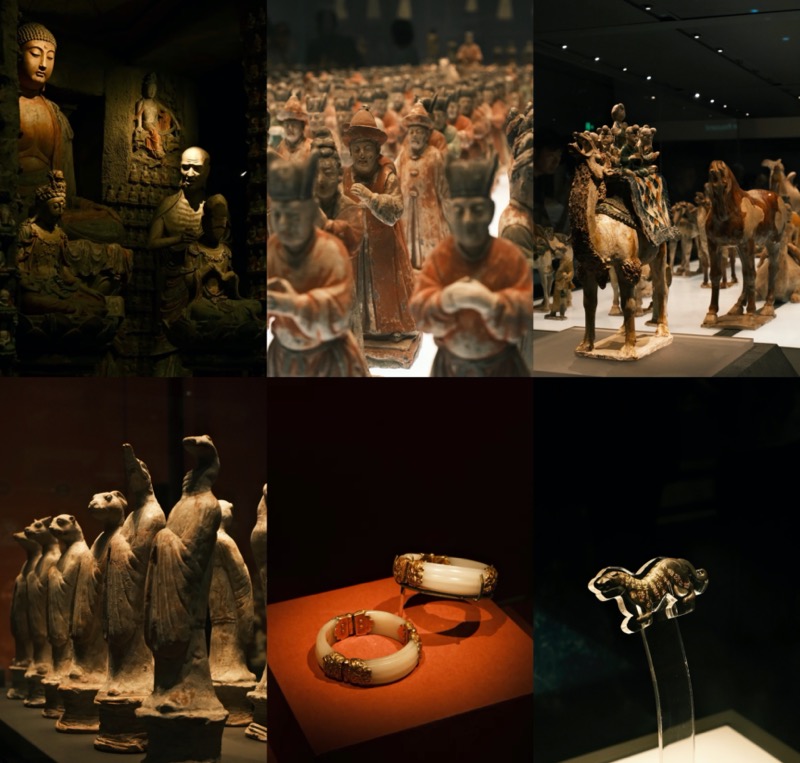
Nicknamed “Pearl of the Ancient Capital”, houses 1.71 million relics, including 18 national treasures—three of which are prohibited from export. The exhibition “Ancient Shaanxi Civilization” highlights the He Zun (bronze vessel with the first mention of "China"), the Jade Seal of a Han Empress, as well as the Camel with Tang Musicians (symbol of the Silk Road).
Xi'an Bell Tower (西安钟楼)
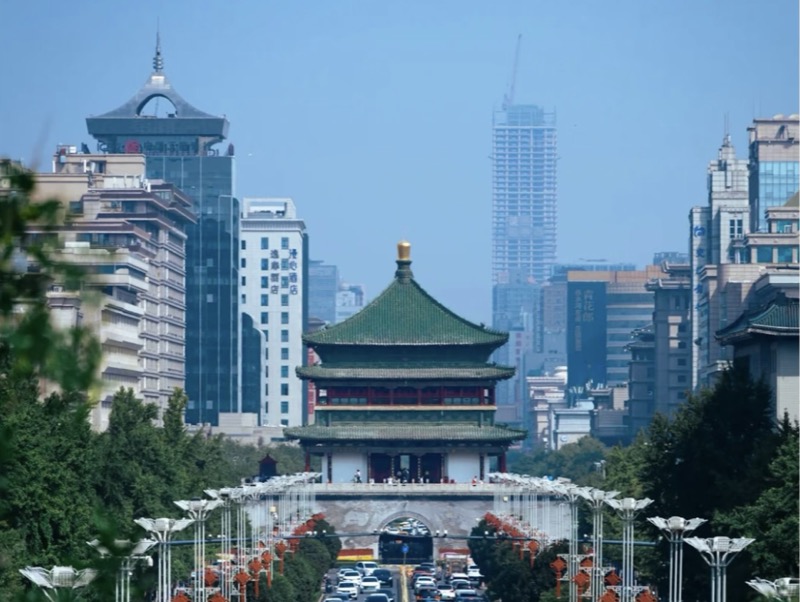
China's largest and best-preserved bell tower (1368), used to keep time and defend the city. Standing 36 meters tall with green glazed tile roofs, it displays Ming-Qing furniture and bell shows (10:00–15:00). At night, its lighting contrasts sharply with the modern traffic.
Xi'an Drum Tower (西安鼓楼)
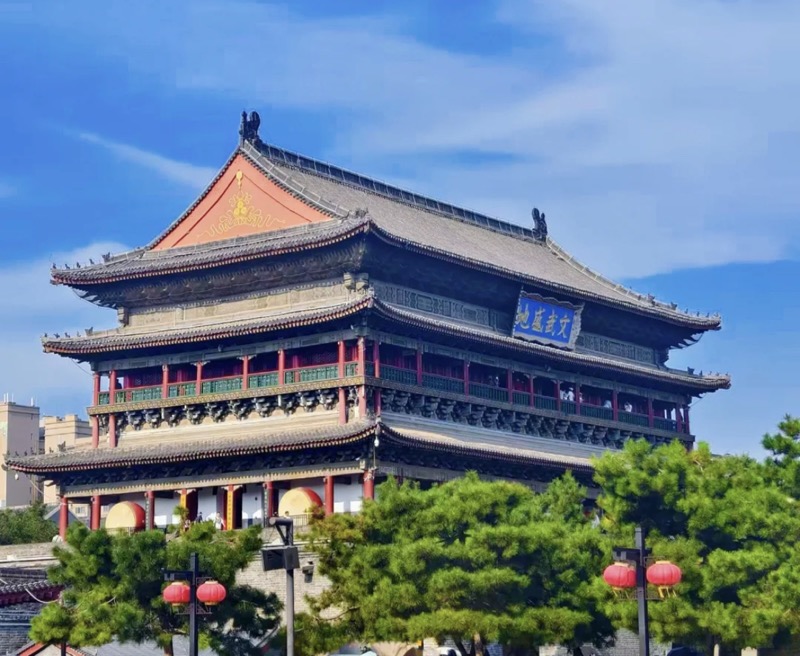
Built in 1380 opposite the Bell Tower, it owes its name to the drum that announced the curfew. Standing 34 meters tall, it bears inscriptions glorifying Tang culture. Today it is a museum of traditional music, with performances. “Bells and Drums” (11:00/16:00) that revive the golden age. At its entrance, a replica of the “Copper Water Clock” marks the passage of time.
Muslim Street (西安回民街)
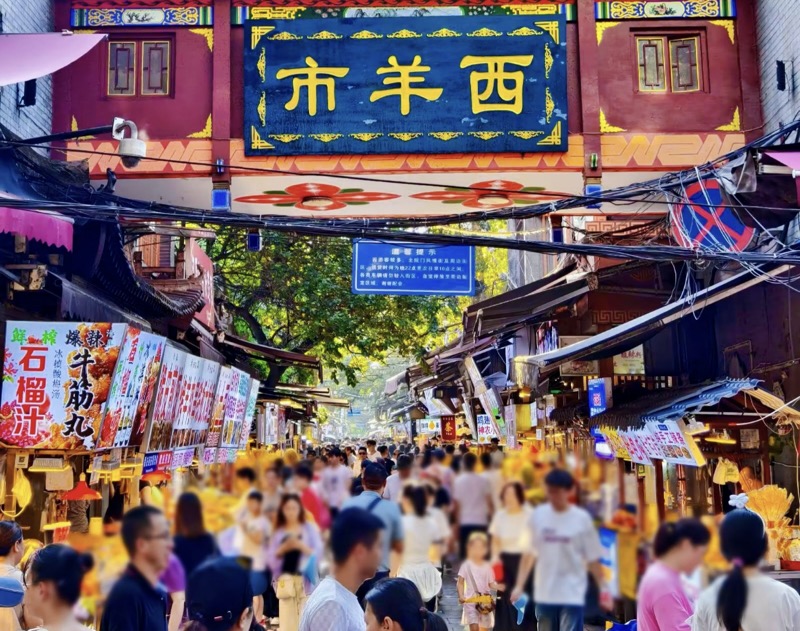
This 1,300-year-old neighborhood, with cobblestone streets like Beiyuanmen, is home to 300 century-old shops and gems like the Great Mosque of Huajue (Tang Dynasty) and the Gao Residence (Ming-Qing architecture). Ideal for testing “yangrou paomo” (bread and lamb soup) at dawn, buy “roujiamo” (Chinese hamburgers) at noon, and get lost in its alleys at nightfall.
Great Night Street of the Tang Dynasty (大唐不夜城)
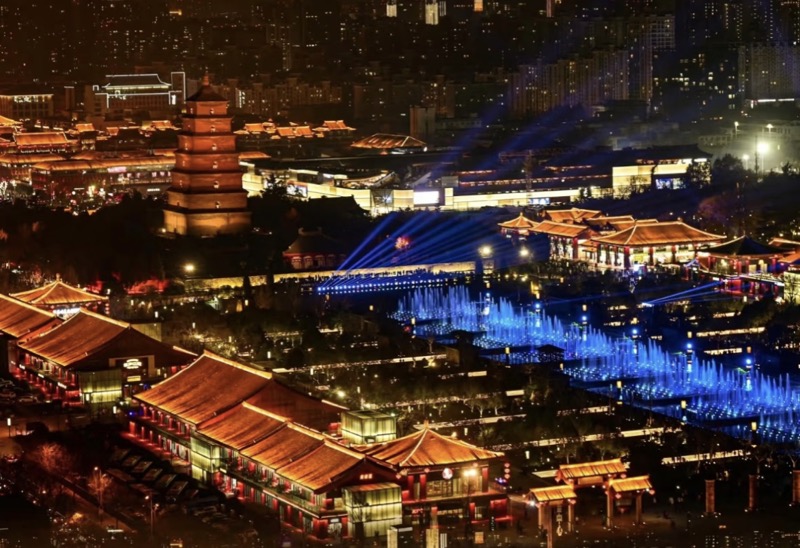
China's first themed walk inspired by the Tang Dynasty (618-907). Featuring 1.5 km of imperial lantern lights and shows such as “Return to Chang'an” o “The Lady of Balance”, recreates the splendor of the “City That Never Sleeps”. Sculptures such as “The Zhenguan Government” coexist with the Shaanxi Theater and Concert hall, merging past and present.
Typical Xi'an food: flavors that tell stories
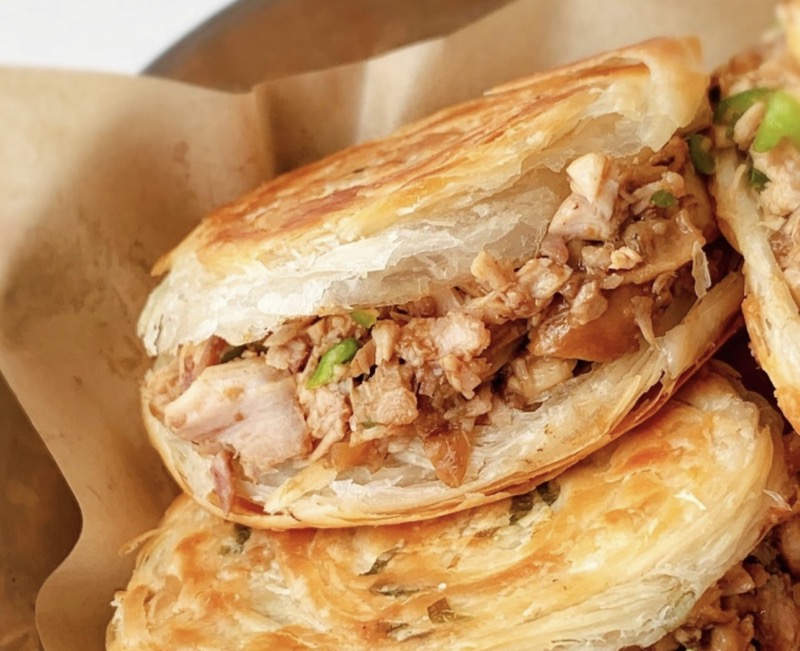
Roujiamo (肉夹馍)
Artisan bread filled with slow-cooked pork. The original Chinese sandwich!
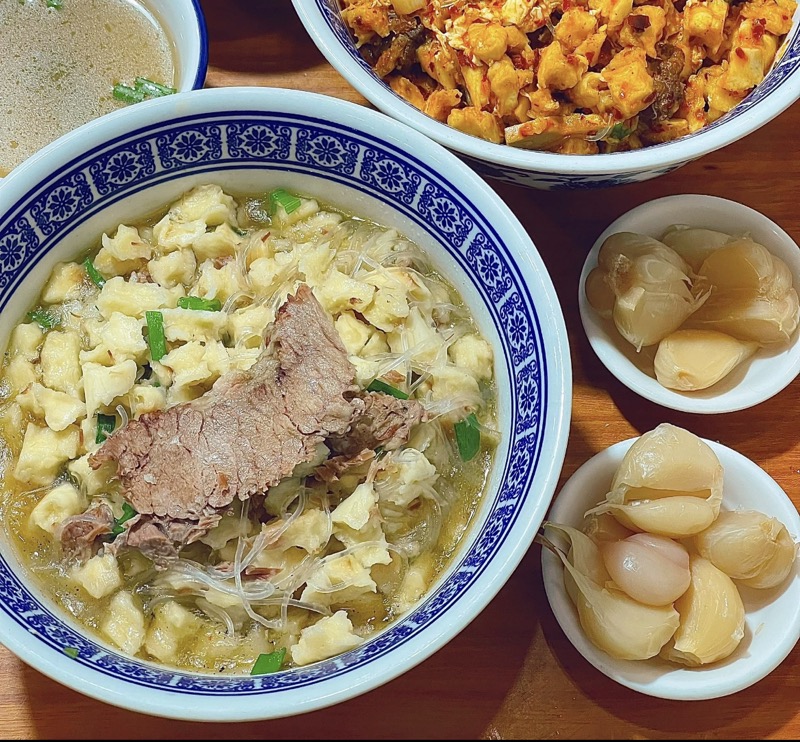
Yangrou Paomo (羊肉泡馍)
Hand-sliced bread dipped in thick lamb broth with noodles and pickled garlic.
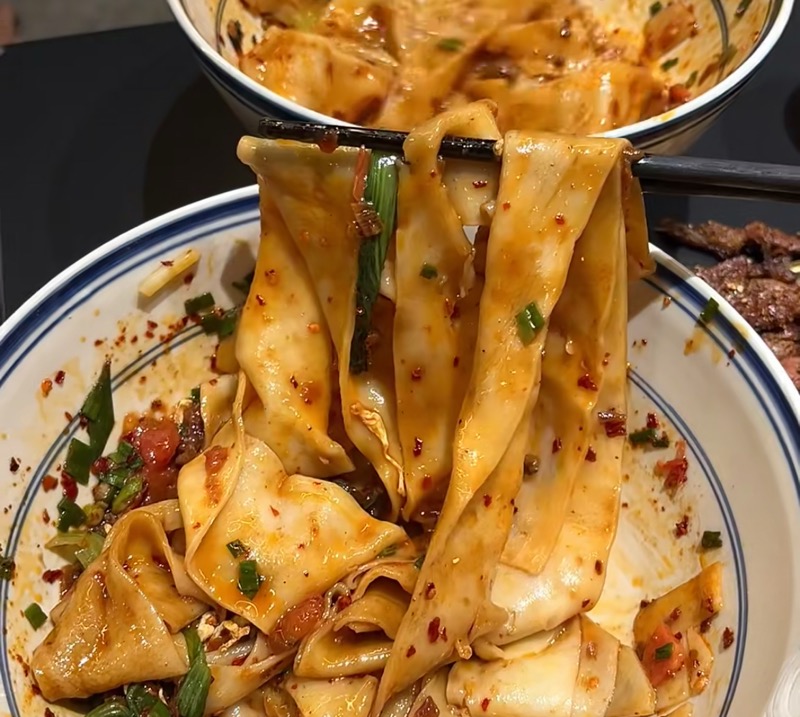
Biangbiang Noodles (Biangbiang面)
Handmade wide noodles with spicy sauce, tomato, egg, and meat. A hearty feast!
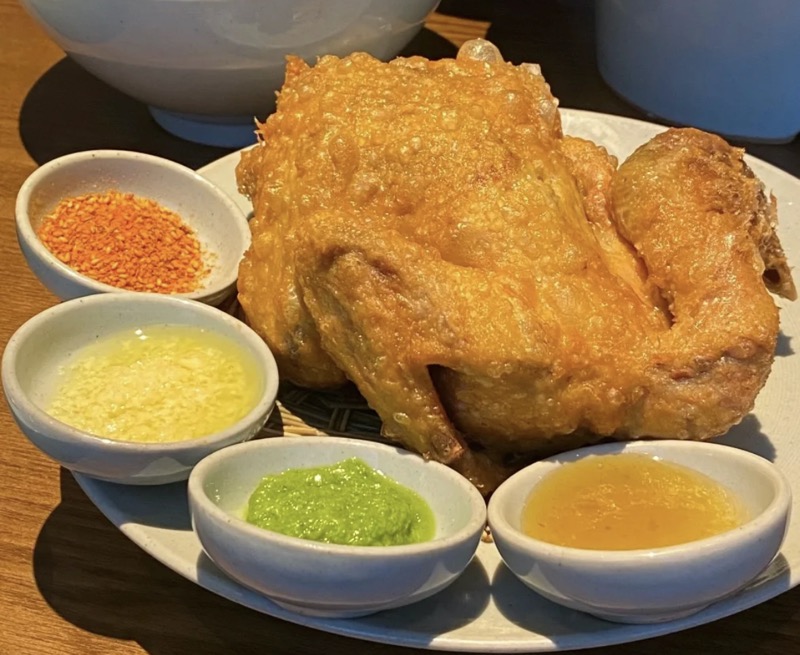
Pumpkin-shaped chicken (葫芦鸡)
Whole chicken boiled and then fried, crispy on the outside and tender on the inside.
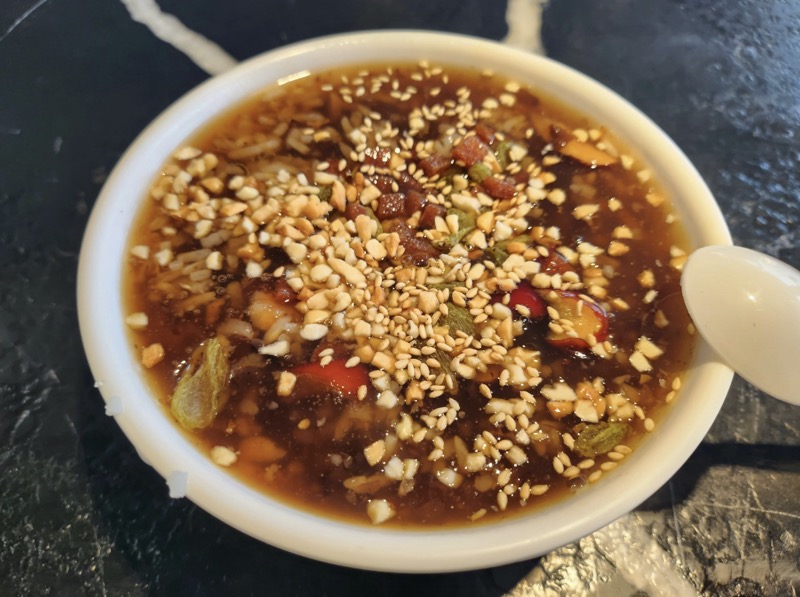
Eight Treasure Sweet Rice (八宝粥)
A sticky mix of rice, dates, nuts, and seeds. Sweet and comforting.
Frequently asked questions about traveling to Xi'an
What is the best time to visit Xi'an?
Spring (March-May) and autumn (September-November) offer pleasant weather and fewer crowds. Winter is ideal for snowy Huaqing and hot spring baths.
How to buy tickets without falling for scams?
Purchase your tickets from the official websites or verified WeChat accounts for each attraction. Avoid overly cheap tour packages.
How to move around the city?
The metro covers almost all tourist spots. Rent a bike to explore the wall. To visit the Terracotta Warriors or Huaqing, take metro line 9 or take the tourist buses.
Are there any language problems?
Most attractions have signage in English. Many young people speak some English. Bring a translation app just in case.
What cultural norms should I be aware of?
Keep silent in temples, respect dietary rules in the Muslim quarter, and don't touch relics like the Terracotta Warriors.
From the motionless yet imposing warriors to the vibrant energy of its nighttime streets, Xi'an is a place where every corner tells a story. If you love history, good food, and vibrant culture, Xi'an is for you. Pack your bags, because your journey to the heart of China begins here.
